
The Local Architecture | The Secret Language of Mid-Century Modern Palm Springs
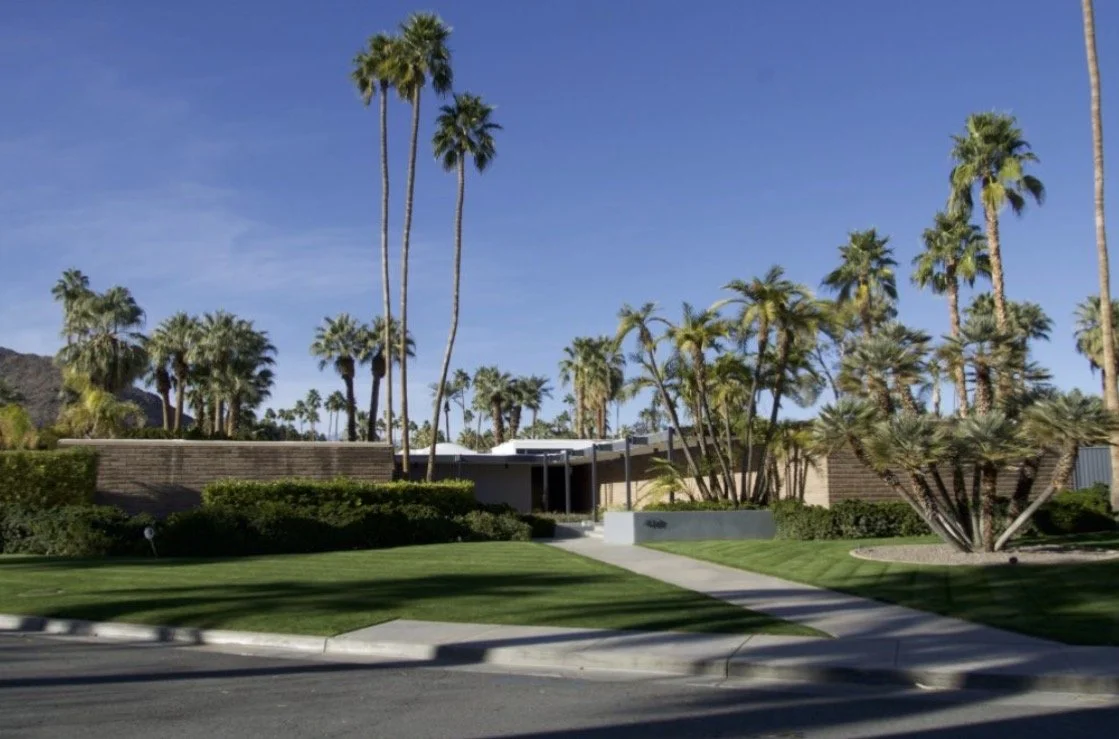
Dinah Shore Home, Wexler design, now owned by Leonardo DiCaprio
Palm Springs has many languages.
There is the language of cocktails, spoken fluently from shaded patios at golden hour. There is the language of swimming pools, where a perfectly placed chaise lounge says more than most conversations. There is the language of food, which happens to be our favorite dialect.
But perhaps the city's most distinctive language is one that never utters a word at all.
It is the secret language of Mid-Century Modern architecture.
Visitors often arrive in Palm Springs knowing they like the look. They recognize the clean lines, the dramatic roof angles, the walls of glass and the effortless cool. What they may not realize is that every one of those design choices is saying something. Palm Springs isn't merely filled with beautiful buildings. It is filled with buildings having a conversation.
A House That Wants You to Look Outside
In most places, architecture is designed to protect people from nature.
In Palm Springs, Mid-Century architects decided to negotiate with it.
The great masters of desert design—Albert Frey, William Krisel, Donald Wexler, E. Stewart Williams, Richard Neutra and others—understood that the surrounding landscape was too magnificent to ignore. Instead of creating walls between people and the desert, they created windows.
Huge windows.
Glorious windows.
Windows so large that they occasionally make visitors wonder whether there is any house left at all.
The message was simple: the mountains are part of the room.
When you stand inside a classic Palm Springs home and gaze toward Mount San Jacinto, you're experiencing one of Mid-Century Modernism's central ideas—that architecture should connect us to our environment rather than separate us from it.
The Roof That Says "Relax"
Those iconic butterfly roofs that appear throughout Palm Springs weren't created simply because they looked stylish.
Although they certainly do.
The dramatic upward sweep of a butterfly roof creates a sense of openness and optimism. It directs the eye skyward. It suggests possibility. It feels lighthearted.
In a city built as a playground for Hollywood stars, successful executives and winter escapees, that wasn't accidental.
Palm Springs architecture was designed for leisure.
Not laziness. Leisure.
There is a difference.
The architecture quietly encourages people to slow down, gather outdoors, host dinner parties and spend an extra hour beside the pool. The buildings themselves seem to be reminding us that life isn't measured solely by productivity.
A remarkably Palm Springs idea.
The Front Door That Doesn't Show Off
One of the most curious features of many Mid-Century homes is that the front entrance can be surprisingly understated. In many traditional homes, the front door serves as a declaration.
Look at me.
Admire me.
Notice how important I am.
Palm Springs often takes a different approach.
Visitors may walk through a modest gate or understated entry before discovering a dramatic courtyard, breathtaking mountain views or an expansive interior hidden beyond. I’ve heard it described as “discreet to the street.”
The architectural message is subtle but profound: discovery is more satisfying than display.
Palm Springs has always understood the value of mystery. After all, this is a city built on hidden celebrity hideaways, secret romances and stories that become more interesting with each retelling.
Why Palm Springs Fell in Love With Modernism
Mid-Century Modern architecture arrived at precisely the right moment. Postwar America was optimistic. New technologies were emerging. Design was becoming democratic. The future seemed bright.
Palm Springs had one enormous advantage over older American cities.
It wasn't burdened by centuries of architectural tradition.
It was a young resort city with sunshine, open land and wealthy clients who wanted tomorrow instead of yesterday.
Architects experimented. Developers innovated. Homeowners embraced bold concepts.
One of the defining characteristics of Palm Springs architecture isn't just glass.
It's desert light.
The changing shadows.
Morning.
Golden hour.
Blue hour.
Moonlight.
Architecture here never quite looks the same twice.
The San Jacinto Mountains and the shifting desert light became the canvas for this new vision of American living. That interplay of light and landscape transformed Palm Springs into the perfect laboratory for testing these new ideas. Nowhere else does light and landscape collaborate quite the way they do in Palm Springs.
What emerged was not simply a style but a philosophy.
Indoor and outdoor living should blend together.
Beauty should be functional.
Luxury should feel effortless.
Good design should improve everyday life.
More than half a century later, the light and landscape still feel like tomorrow.
Reading the City
One of the joys of exploring Palm Springs is learning to read its visual vocabulary.
The breeze block walls. The clerestory windows. The floating rooflines. The geometric screens. The carefully framed mountain views.
Each element tells a story.
Each neighborhood becomes a chapter. Each building becomes a sentence in an ongoing conversation between desert, design and imagination.
And like any great language, the more you learn, the more fascinating it becomes.
The Best Way to Experience Palm Springs? Walk Through It.
At Artisan Food Tours, we often tell guests that Palm Springs reveals itself slowly.
You can drive through the city and admire its architecture.
Or you can walk through it.
Walking allows you to notice the details. The shadows cast by a breeze block wall. The angle of a butterfly roof against a cobalt sky. The way a restaurant patio seamlessly merges with the landscape beyond it.
Our Palm Springs walking food tours combine culinary discoveries with the stories, history and design that make this desert city unlike anywhere else in the world.
Because in Palm Springs, architecture isn't merely something you see. It's something you experience.
And once you learn its secret language, you'll never look at the city the same way again.
Explore Palm Springs One Story at a Time
Join Artisan Food Tours for a guided walking food tour through downtown Palm Springs and discover the flavors, history, architecture and hidden stories that have shaped this remarkable desert oasis. From Mid-Century Modern landmarks to unforgettable local restaurants, every stop adds another chapter to the story of Palm Springs.
After all, every great city has a language.
And Palm Springs speaks in glass, steel, sunshine and style.
Continue exploring Devour the Desert for more stories about Palm Springs architecture, celebrity history, food, culture and the remarkable people who shaped this oasis. Browse our "The Local…" collections to discover the architecture, flavors, history and culture that make Palm Springs unlike anywhere else.
Dave Ball is a local tour guide and co-owner of Artisan Food Tours with his wife, Phyllis. He spends an inordinate amount of time thinking about Palm Springs history, neighborhood architecture and where to find a great meal. His current food obsession is local Deglet Noor dates with Fix & Fogg Crunchy Peanut Butter. After living in Frank Lloyd Wright's Oak Park neighborhood, Dave never quite recovered and now happily sees every city as a conversation between food, architecture and the people who built it.