
The Local Celebs | Alfred Hitchcock in Palm Springs: Suspense, Sunshine, and Second Helpings
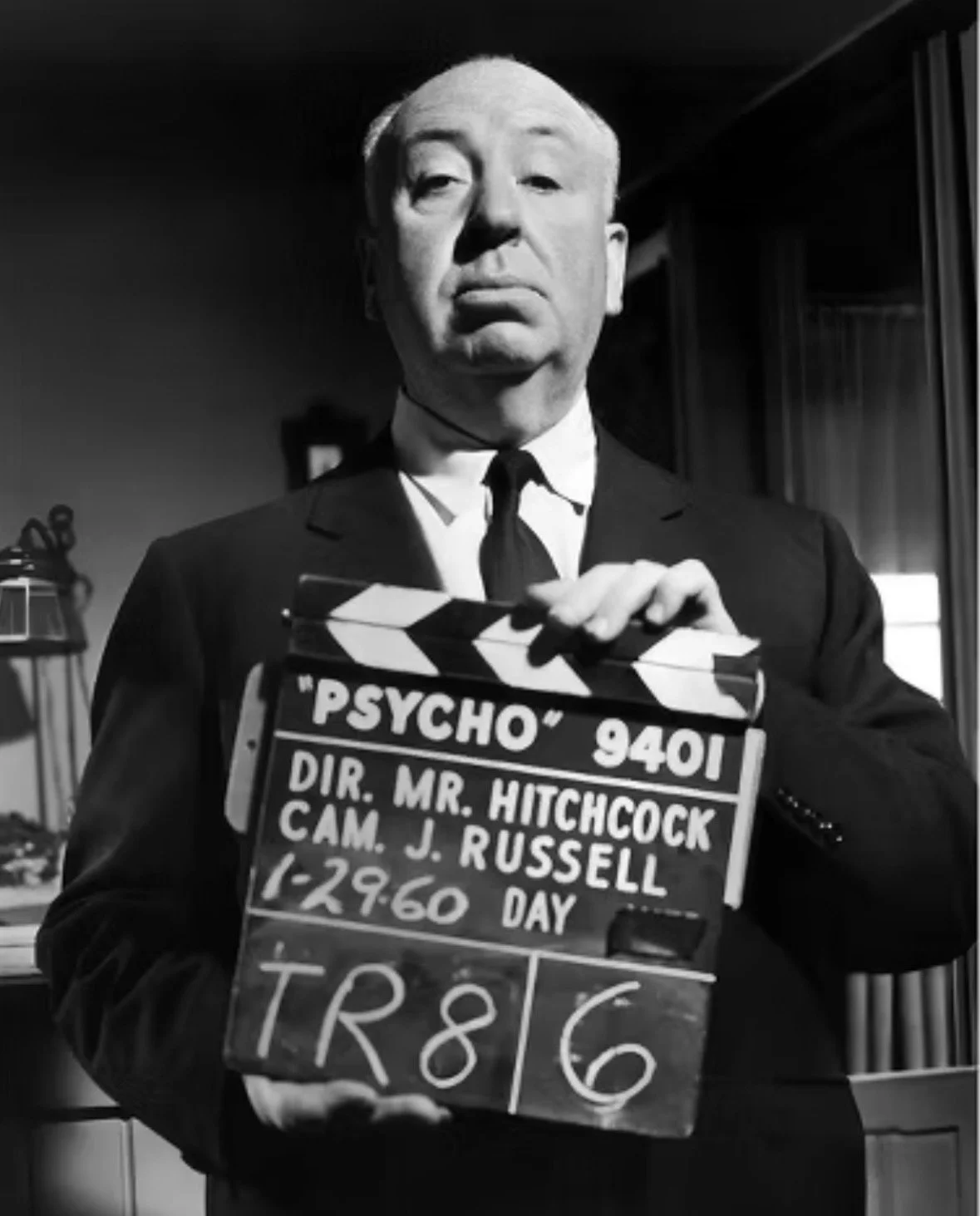
Hitchcock, on the set of Psycho in 1960.
Alfred Hitchcock spent a career making audiences nervous.
Not frightened exactly. Nervous.
Any director can startle you with a loud noise. Hitchcock preferred a gradual approach. He understood that anticipation is often more powerful than the event itself. This is true of murder mysteries, ticking bombs, and restaurant reservations.
Fear, he knew, was best served slowly.
Like a carefully prepared meal.
Anyone can throw a pie in someone's face. Hitchcock preferred to let you watch the pie be baked, wonder if it was poisoned (and if so, by whom?) and then spend the next ninety minutes regretting dessert altogether.
Life in Palm Springs
Palm Springs offered the Master of Suspense a welcome escape from Hollywood's pressures, though one suspects he was never entirely capable of relaxing. He was not built for relaxation. He was built for observation.
During his visits to the desert, Hitchcock frequently spent time at Las Palomas(Spanish for "The Doves"), the Palm Springs home of Cary Grant. The two shared one of Hollywood's most successful creative partnerships, collaborating on classics including Suspicion, To Catch a Thief, and North by Northwest.
Grant's Palm Springs residence became a gathering place for movie stars seeking sunshine, privacy, and the increasingly rare luxury of being left alone.
The home, an exact replica of a nineteenth-century Andalusian farmhouse, sits behind whitewashed stucco walls, royal-blue shutters, and red clay roof tiles. Even today it feels less like Hollywood glamour than an unusually peaceful corner of Spain tucked into the Movie Colony.
It was precisely the sort of environment Hitchcock enjoyed: calm on the surface, intriguing underneath.
Grant built a custom guest wing at Las Palomas that served as Hitchcock's desert sanctuary. Cary even jokingly called it “the Hitchcock wing.” It allowed him to relax in luxury away from Hollywood's hectic studio culture, where he spent hours by the estate's heated pool. Palm Springs offered many things he valued: sunshine, discretion, and neighbors whose secrets were at least professionally interesting.
One enduring Palm Springs story claims Hitchcock was repeatedly harassed by a crow while relaxing beside Cary Grant's pool. Whether true or not, locals have long enjoyed connecting the incident with The Birds, proving that every good suspense story deserves a version that may or may not have happened.
Hitchcock and Grant Make Two More Movies
The desert also played a role in one of Hollywood's more temporary retirements. After stepping away from filmmaking, Grant needed little encouragement to enjoy life in Palm Springs. Hitchcock, however, had other ideas. He was never entirely willing to let his favorite leading man remain retired.
Two of their best collaborations, To Catch a Thief and North by Northwest, were made as a result of Hitchcock’s coaxing, proving that retirement has always been somewhat negotiable when the right script appears.
Or perhaps when the right director calls.
Why Palm Springs?
Palm Springs itself must have appealed to Hitchcock's sensibilities. The city is full of visual intrigue. Midcentury homes tend to reveal very little from the front while quietly concealing remarkable interiors.
Locals often describe them as "discreet to the street."
One imagines Hitchcock approved.
After all, the gap between appearance and reality was not merely Hitchcock's favorite plot device. It was practically his artistic philosophy.
His famous silhouette, dark suit, and unmistakably portly frame suggest a man who rarely skipped a meal. His restaurant of choice was Melvyn’s, a favorite of the Hollywood crowd. He enjoyed good food and frequently joked about his own appetite. If suspense was his profession, lunch may have been his hobby. The difference between suspense and lunch, after all, is that the food eventually arrives.
When not eating, Hitchcock was busy reinventing cinema.
Hitchcock’s Greatest Film
His work with Janet Leigh in Psycho remains one of the most influential collaborations in film history.
The famous shower scene lasts less than a minute on screen, yet it required roughly a week of filming. Leigh spent day after day standing under cold running water while the crew filmed dozens of angles that would later be assembled into one of cinema's most shocking sequences.
Because Hitchcock had to satisfy the censors, the violence exists largely in the audience's imagination.
Hitchcock achieved the effect through a barrage of rapid film cuts and fragmented images. A knife. A scream. A hand. Dark liquid disappearing down a drain. An eye staring into nothing.
In Hitchcock's hands, an ordinary bathroom became a trap. The scene was not merely about violence. It was about vulnerability itself. Few directors have ever changed human behavior quite so… efficiently.
Hitchcock believed genuine anxiety produced genuine performances. To achieve that goal, he often kept actors uncertain. The approach was controversial then and remains controversial today. It also worked.
Hitchcock treated anxiety the way great chefs treat seasoning: a little is essential, too much is memorable. He taught audiences that danger could lurk behind any door, inside any house, or beneath any perfectly respectable staircase.
Palm Springs, fortunately, offered lower stakes.
The sunshine was considerably more reliable than human nature.
And if a flock of birds suddenly appeared overhead, residents could at least reassure themselves that it was probably migration season and not a publicity stunt.
The Stories are Still Here
Palm Springs is best revealed by what remains hidden behind private hedges and unassuming front doors. Beneath the relentless sunshine lie stories of ambition, reinvention, rivalry, jealousy, romance, and the occasional scandal. Bright light has always cast dark shadows here.
Our Palm Springs food tours combine good food, good stories, and just enough intrigue to keep you guessing what lies around the corner. On our Uptown tour, we stroll by Copley’s, now a restaurant that was Cary Grant’s house for guests other than Hitchcock.
Join us at Artisan Food Tours as we explore Palm Springs one memorable story at a time. Along the way you'll discover why this desert oasis became a retreat for so many creative people… even the occasional master of suspense.
Unlike a Hitchcock film, you'll always know where the next course is coming from, even the pie.
And should someone suggest a shower before the tour… we advise checking behind the curtain first.
Enjoyed this article? Explore more of our "Local …" series to discover the Palm Springs stories that helped shape the desert's singular character. You'll find collections devoted to food, architecture, celebrities, history, culture and the people who continue to make Palm Springs unlike anywhere else.
Dave Ball is a local tour guide and co-owner of Artisan Food Tours with his wife, Phyllis. He spends an inordinate amount of time thinking about Palm Springs history, neighborhood architecture, great movies and where to find the best meal. His current food obsession is local Deglet Noor dates with Fix & Fogg Crunchy Peanut Butter. The breakfast bread at Bread & Flours, however, has recently mounted a challenge to the reigning obsession. Stay tuned here for further developments.