
The Local Culture | The Oasis of Palm Springs: Nothing This Beautiful Happens by Accident
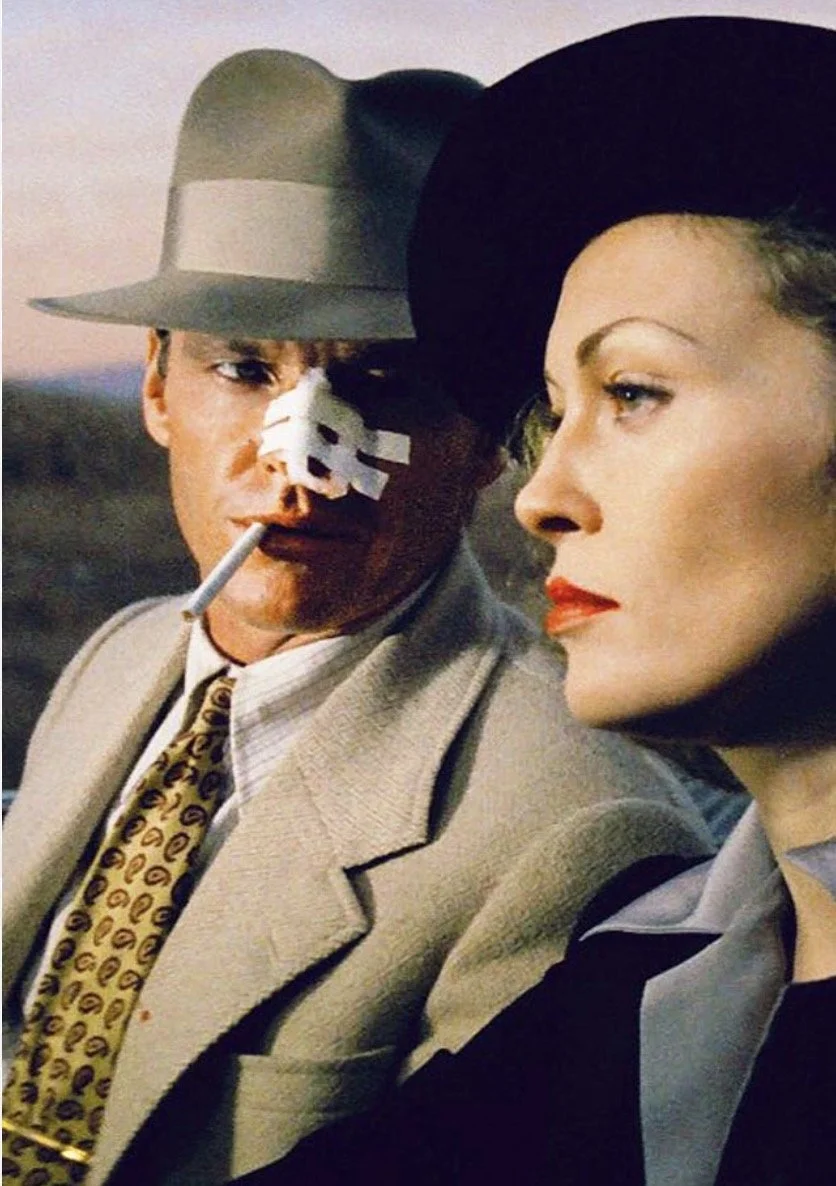
Jack Nicholson and Faye Dunaway in Chinatown, 1974
Palm Springs is a city built on optimism.
It is also built on plumbing.
Visitors rarely think about this. They are understandably distracted by mountain views, perfectly chilled martinis, impossibly blue swimming pools and citrus trees that appear to have signed a long-term lease with the sun.
Everything feels effortless.
It isn't.
Every palm tree, every golf course and every restaurant patio shaded by lush bougainvillea owes its existence to one remarkable fact: someone figured out how to persuade water to spend the winter in the desert.
Around here, that qualifies as the greatest magic trick of all.
California's Favorite Villain
It has always seemed unfair that Southern California became the natural home of film noir.
Chicago has rain.
New York has dark alleys.
Palm Springs has cloudless skies and people wearing orange and light blue resort attire.
And yet Southern California keeps producing stories of ambition, greed, lust and questionable real estate deals.
Perhaps sunshine simply makes everyone's motives easier to see.
No film understood this better than Chinatown, where private detective Jake Gittes, memorably played by Jack Nicholson, discovers that behind every respectable civic improvement project lurks a villain trying to become spectacularly wealthy.
The movie revolves around water rights, political influence and land speculation. Although fictional, it was inspired by California's real water wars—and remains uncomfortably relevant today.
It turns out that in California, the most dangerous weapon isn't a revolver.
It's a deed.
How Los Angeles Became Los Angeles
In the early years of the twentieth century, Los Angeles had a problem.
Millions of people wanted to live there.
Unfortunately, nature had other plans.
The solution was breathtakingly ambitious: build an aqueduct stretching more than 200 miles and redirect water from the Owens Valley into the growing metropolis.
It was an engineering triumph.
It was also controversial enough to inspire lawsuits, sabotage, endless political arguments and eventually one of the greatest movies ever made.
If every city gets the mythology it deserves, Los Angeles chose noir. The French word means "black," but in Southern California it might just as easily mean ambition wearing a linen suit.
Palm Springs Played a Different Hand
While Los Angeles had to scheme its way to water, Palm Springs simply needed to listen to the mountain.
That difference shaped everything — the architecture, the attitude, the food, and the particular brand of effortless glamour the valley has been perfecting ever since.
Palm Springs won the geological lottery and has been living off the interest ever since.
For thousands of years, snow falling high in the San Jacinto Mountains slowly filtered underground, creating a huge aquifer beneath the desert. And in a few spots that water bubbles back up to the surface, often heated geothermally.
The Agua Caliente people understood the value of these natural springs long before swimming pools became mandatory accessories for movie stars. In fact, they built a community around them.
The rest of us eventually built boutique hotels.
Today visitors stroll downtown believing they have discovered an effortless oasis. It is far from effortless.
The city politely allows this misunderstanding.
We live in the gap between reality and that illusion.
This is our noir.
Paradise Requires Maintenance
There is something wonderfully Palm Springs about making the extraordinary effort to look completely relaxed.
The architecture appears to float.
The cocktails seem to arrive precisely when needed.
The pools sparkle without visible assistance.
Even the landscaping has perfected an expression that says, "Oh this? I just threw something together."
Meanwhile, beneath the streets, wells, recharge basins, pumps and engineers are quietly ensuring that thousands of citrus trees, restaurants, hotels and gardens continue behaving as though they live in a much wetter neighborhood.
Like a Fred Astaire dance number, it only looks easy.
The Secret Ingredient
Our food tells the same story.
Every plate begins with water.
Which may explain why Palm Springs restaurants have always understood something fundamental: luxury isn't excess.
Luxury is making difficult things appear effortless.
The dates that thrive here—plump, caramel-sweet Medjools that taste of concentrated desert sun—depend on that subterranean mountain runoff.
The citrus groves that shaped the valley's agricultural identity, the fresh herbs on a chef's plate, the perfectly chilled cocktail on a shaded patio... none of it exists without water.
Follow the Water
The best way to understand a place is to savor it slowly, one block at a time — with someone who knows where the water came from, who the building belonged to first, and why the date on your plate tastes exactly like concentrated desert sun.
That's what we do on our Palm Springs food tours. Every bite comes with a story:
Sometimes it's about Frank Sinatra and friends out on the town for the evening.
Sometimes it's about our first architect Albert Frey convincing concrete to flirt with the mountains.
Sometimes it's about a century-old argument over who gets the water and who gets the wealth.
All of them eventually lead to the same conclusion.
Palm Springs isn't simply a city in the desert.
It's a carefully choreographed illusion that survives because generation after generation keeps making the impossible look effortless.
Join us at Artisan Food Tours for a small-group Palm Springs food tour where every bite comes with a story and every oasis hides a plot twist worthy of classic film noir.
Palm Springs never had to steal the water. It just made you forget to ask where it came from.
Enjoyed this article? Explore more of our "Local …" series to discover the Palm Springs stories that helped shape the desert's singular character. You'll find collections devoted to food, architecture, celebrities, history, culture and the people who continue to make Palm Springs unlike anywhere else.
Dave Ball is a local tour guide and co-owner of Artisan Food Tours with his wife, Phyllis. He spends an inordinate amount of time thinking about Palm Springs history, neighborhood architecture and where to find a great meal. His current food obsession is local Deglet Noor dates with Fix & Fogg Crunchy Peanut Butter.
He never forgot Chinatown.