
The Local Flavors | Palm Springs Cocktail Culture: How a Desert City Turned Leisure Into an Art Form
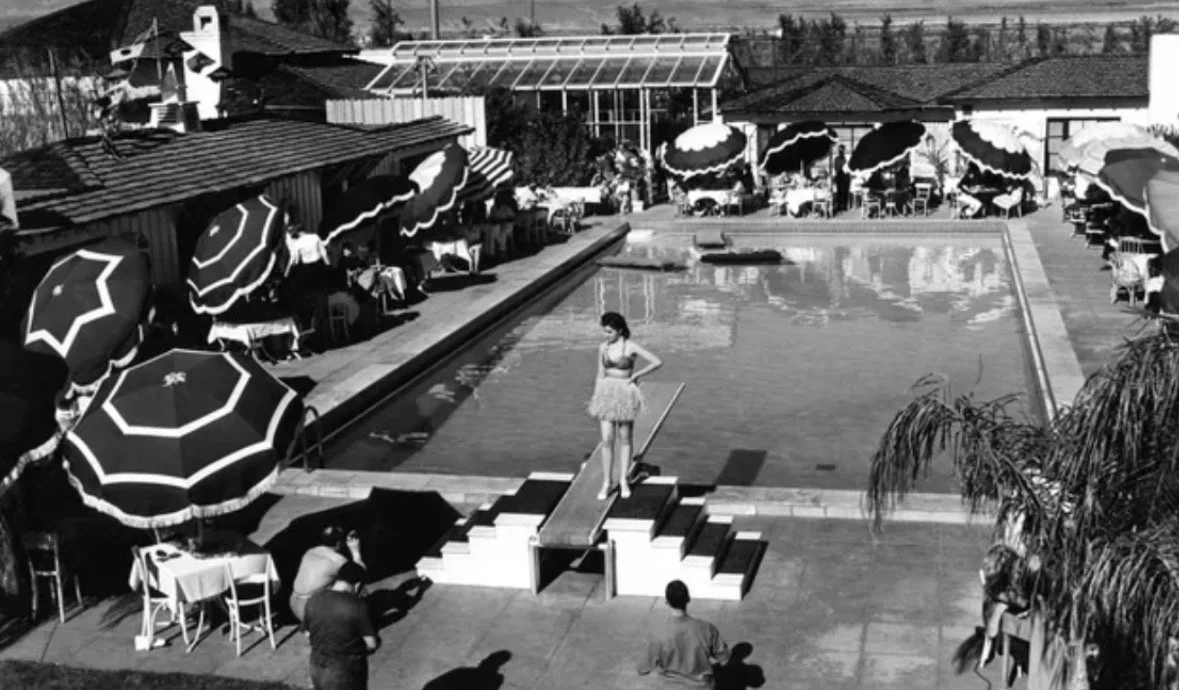
The Racquet Club
Palm Springs has always understood the importance of a good drink.
Not merely the liquid itself, mind you. Plenty of places serve cocktails. Palm Springs elevated them into a social activity, a fashion accessory, a networking tool, and occasionally a competitive sport.
This is a city where movie stars escaped studio executives, where architects sketched houses on cocktail napkins, where golf games somehow stretched into sunset dinners, and where the phrase "just one more" launched countless memorable evenings.
The history of Palm Springs can be told through its architecture, its celebrities, or its remarkable desert setting.
It can also be told one cocktail at a time.
The Desert Learns To Drink
Long before Palm Springs became synonymous with Hollywood glamour, visitors were already arriving in search of something increasingly difficult to find: relaxation.
The desert offered dry air, sunshine, and a slower pace of life. As resorts and hotels emerged during the early twentieth century, bars naturally followed.
After all, nothing pairs better with a 110-degree afternoon than the promise of a cold drink waiting in the shade.
Early Palm Springs cocktail culture borrowed heavily from the elegant hotel bars of Los Angeles and Europe. Guests expected sophistication. Bartenders delivered.
But Palm Springs would soon develop something unique.
The city became one of the few places in America where the rich and famous could temporarily lower their guard.
And that tends to improve both conversation and cocktail consumption.
Enter The Rat Pack
No discussion of Palm Springs cocktail culture can begin anywhere other than with the Rat Pack.
Frank Sinatra, Dean Martin, Sammy Davis Jr., Peter Lawford, and Joey Bishop transformed Palm Springs into their unofficial desert playground during the 1950s and 1960s.
If modern celebrities carefully manage their public image, the Rat Pack often seemed determined to do the opposite.
They drank publicly.
They laughed loudly.
They stayed out late.
And they made it all look impossibly glamorous.
Dean Martin became so closely associated with drinking that many Americans weren't entirely sure whether he was a singer who enjoyed cocktails or a cocktail that occasionally sang.
Martin favored Scotch (although only after performing—the cocktail glass and tipsy demeanor were very much part of the act). Sinatra preferred Jack Daniel's. The precise drinks mattered less than the atmosphere they created.
Visitors arrived hoping they might catch a glimpse of a celebrity.
Instead, they often discovered something even more appealing: a city where everyone seemed to be having a better time than they were back home.
The Racquet Club
Of all the historic Palm Springs bars and social gathering places, none captured the city's spirit quite like the Racquet Club.
Founded in 1934 by actors Ralph Bellamy and Charlie Farrell as a place to play tennis with friends, the club quickly evolved into Hollywood's favorite desert escape. Studio executives, actors, athletes and socialites gathered around the pool by day and drifted toward the bar by night.
Its legendary Sunday brunch was, in theory, a civilized late-morning meal.
In practice, it often resembled a continuation of Saturday night that happened to include eggs.
Stories circulated of movie stars arriving in sunglasses large enough to conceal both their identities and any evidence of the previous evening. Sinatra was a regular. So were countless actors whose names once glowed across theater marquees throughout America.
Bartender Tex George worked at the club for 39 years. One day a woman — a member's guest — sat down at the bar, looked around, and asked Tex if there were any movie stars around. Tex turned to the man sitting a couple of stools away and asked if he'd seen any celebrities. "Nope," replied Clark Gable, "haven't seen a single one."
In many ways, the Racquet Club functioned as Palm Springs' unofficial town square—if town squares featured movie stars ordering martinis in bathing suits.
It was a place where friendships formed.
Careers advanced.
Romances began.
And gossip traveled faster than the desert wind.
The Golden Age Of Hotel Bars
The Racquet Club was only one stage for this cocktail-fueled social theater.
Across downtown Palm Springs and the city's legendary resorts, elegant hotel bars became gathering places for actors, producers, politicians, athletes and anyone fortunate enough to receive an invitation.
At the historic Ingleside on Ramon Road, Melvyn's restaurant has been keeping this spirit alive since 1975—though the property’s history stretches back much further. During Prohibition, Ruth Hardy—who ran the estate as an invitation-only private club—famously had a tunnel built from the property under the road so alcohol could be delivered without anyone seeing. The tunnel, complete with a hidden safe room, still exists today and can be accessed from the hotel lobby.
The great Palm Springs hotel bar occupied a unique position in American culture. It was simultaneously exclusive and remarkably relaxed.
That balance between glamour and informality remains one of Palm Springs' defining characteristics today.
The Rise Of The Poolside Cocktail
The American cocktail had always lived indoors. Mahogany bars. Dim lighting. The comfortable anonymity of a room that didn't care what time it was outside.
Palm Springs politely disagreed.
Here, the drink moved outside. Poolside became its own social institution — part theater, part sport, part afternoon negotiation. Frozen concoctions arrived. Tiny umbrellas appeared. Citrus from the nearby groves found its way into glasses across the valley. Nobody seemed to mind that the sun was still high.
This wasn't the cocktail culture of Manhattan or Chicago.
It was something California invented and Palm Springs perfected: the art of drinking in the light.
From Martinis To Mixology
For a period during the late twentieth century, cocktail culture across America became somewhat... adventurous.
This was an era that gave us fluorescent ingredients, cartoonish names, oversized glasses, and combinations that seemed to have been developed by focus groups rather than bartenders.
Palm Springs participated enthusiastically.
Harvey Wallbanger, anyone?
Fuzzy Navel?
Fortunately, not every cocktail survives its own decade.
Then came the craft cocktail revival.
Bartenders rediscovered classic recipes.
Fresh ingredients returned.
Technique mattered again.
Balance became fashionable.
Palm Springs embraced the movement while adding its own local twist.
Today's bartenders have rediscovered something Palm Springs understood long ago: local ingredients have a way of introducing themselves. Valley citrus brightens a gin cocktail. Dates lend unexpected richness, while desert herbs contribute aroma rather than decoration.
Even today's local distilleries still nod to Palm Springs history. For example, Racquet Club Spirits quietly tips its hat to one of the city's legendary gathering places.
The result is less about novelty than geography.
A great Palm Springs cocktail increasingly tastes like the landscape around it.
Which, here, is exactly as it should be.
What Palm Springs Still Gets Right
The most interesting thing about Palm Springs cocktail culture is not any particular drink.
It's the philosophy behind it.
Conversation matters here.
Lingering matters here.
Watching a sunset while holding a well-made cocktail remains a perfectly respectable use of an evening—even if there's a paper umbrella in the glass.
Walk into almost any good Palm Springs bar at sunset and you'll still find the same cast of characters: retirees beside designers, tourists beside locals, couples celebrating anniversaries next to friends debating where dinner should be. The sunglasses are newer and the playlists have changed, but the essential ritual remains intact.
For the last century, Palm Springs has been selling a remarkably simple promise.
Not fame.
Not wealth.
Not status.
Plenty of places offer those.
Palm Springs offers something rarer: the chance to sit outside with people you enjoy, order something cold, and forget what time it is.
Maybe that's why Palm Springs has never really gone out of style. The drinks have changed. The bars have changed. The celebrities certainly have. But the promise hasn't. Come here, slow down, stay awhile, and nobody will think you're wasting time. Around here, that's practically considered good manners.
Raise A Glass To The Story
At Artisan Food Tours, we believe the best way to discover downtown Palm Springs is through the stories hidden behind its restaurants, historic buildings, neighborhood gathering places, and yes, its cocktail glasses.
That's exactly the experience we try to create on our downtown walking tours—great food, fascinating history, memorable architecture, and the stories that connect them.
Join us and discover why Palm Springs has been perfecting the art of slowing down for nearly a century.
We'll happily raise a glass to that—and save you a seat at the table.
Some cities tell their stories. Palm Springs serves them.
Enjoyed this article? Explore more of our "Local …" series to discover the Palm Springs stories that helped shape the desert's singular character. You'll find collections devoted to food, architecture, celebrities, history, culture and the people who continue to make Palm Springs unlike anywhere else.
Dave Ball is a local tour guide and co-owner of Artisan Food Tours with his wife, Phyllis. He spends an inordinate amount of time wandering Palm Springs in search of forgotten stories, interesting architecture, and restaurants worth recommending to strangers. His current obsession is local Deglet Noor dates with crunchy peanut butter, chased by a smoky Old Fashioned made with date syrup and a giant ice cube. He considers this a perfectly balanced meal.