
The Local Questions, Vol. 11 | Field Notes From Palm Springs: The Desert Is Not Impressed
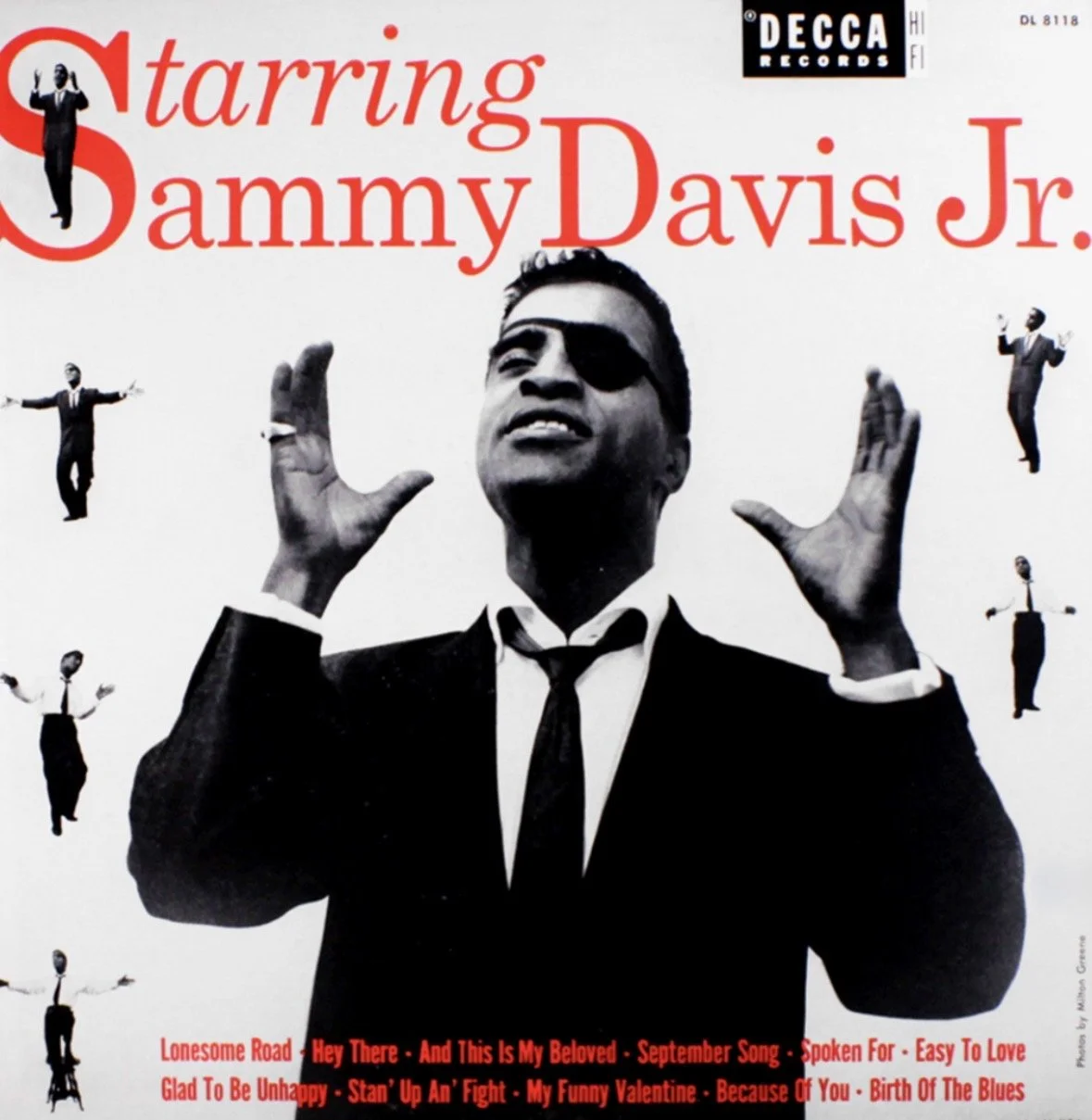
Sammy Davis, Jr.’s only #1 album, five months after the accident.
Welcome to another edition of Field Notes From Palm Springs, brought to you by Artisan Food Tours.
This is the place where we ask the weird, wacky and wonderful questions that come to mind once your eyes have glazed over from the sun, your water bottle has been empty for the last forty-five minutes, and everything in sight is beginning to shimmy like a 60s go-go dancer.
Let’s tackle a few seemingly random questions… and then go find a happy hour where the lights are low and the AC is high.
What are those tall skinny plants and why are they all dead?
What are those large, furry, horned creatures climbing all over the mountains?
How did Sammy Davis Jr. pack so much talent into that small frame? And what was up with his famous slightly shifting gaze?
Here we go.
The Ocotillo
The desert has a peculiar way of making you reconsider the definition of thriving.
Consider the ocotillo.
For much of the year, it looks like someone stuck a bundle of dead branches into the ground and then forgot about it.
Then it rains.
Leaves appear.
Flowers follow.
Suddenly the thing is green and red and apparently quite pleased with itself.
The ocotillo is not a cactus, although it has clearly spent some time studying the competition. It has thorns, patience and an impressive tolerance for conditions that would cause most garden plants to file a formal complaint.
When the water disappears, it drops its leaves and waits. And waits.
This is not death.
It's more of a long-term leave of absence.
The Bighorn Sheep
The desert bighorn sheep take a different approach.
To survive, they go up.
And then they go farther up.
If you have ever looked at the San Jacinto Mountains and thought that the terrain appeared unsuitable for living creatures, you are correct. The mountains are steep, rocky and generally inhospitable to anything that has not been specifically designed for this assignment.
Bighorn sheep have.
Their padded hooves let them negotiate slopes that would make a perfectly healthy human question his recreational choices. They can survive with very little water, eat plants that don't look edible, and retreat into terrain where predators have a difficult time following.
The bighorn sheep have apparently decided that the best defense against being eaten is to become extremely inconvenient.
The strategy isn't foolproof. Every so often a bighorn's confidence outpaces its footing, and the mountain wins the argument. Even a specialist misjudges the terrain now and then.
Sammy
And then there was Sammy Davis Jr.
His own identity was, like much of his life, complicated.
He was born in Harlem in 1925 to Sammy Davis Sr., a Black entertainer, and Elvera Sanchez, a dancer he described as Puerto Rican.
Later biographers established that she was born in New York to Cuban parents.
His childhood was not exactly conventional.
His parents separated when he was three. His father took him on the road, where Sammy became part of the family business before he was old enough to have a say in the matter.
He never went to school. By the time most children were learning multiplication tables, Sammy was learning how to dance, sing, tell jokes and hold an audience.
He was also small. As history repeatedly demonstrates, children are not always known for their sensitivity toward the unusually small, unusually talented or otherwise inconveniently different.
Sammy was teased and bullied. Then he grew up and discovered that adulthood had some additional forms of bullying available.
During his Army service, he encountered something considerably more serious. He was beaten and subjected to racial abuse.
Eventually, he was assigned to an entertainment unit, where he discovered that an audience that might despise him offstage would still applaud him onstage.
He later described his talent as his weapon.
In 1950, Sammy went to the Copacabana in New York with Buddy Rich. They were turned away because Sammy was Black.
When Frank Sinatra heard about it, he insisted that Sammy return the following night and be admitted.
In Las Vegas Sammy could perform at the hotels, but at first wasn't allowed to book a room. Black performers were routinely required to live elsewhere, sometimes in segregated neighborhoods.
Here was Sammy Davis Jr.—one of the most gifted entertainers in America—being told, essentially, You may entertain our guests, but please don't mistake yourself for one.
Eventually, Sammy pushed back, insisting that he and his fellow performers be allowed to stay at the Sands where they worked.
He kept performing. He sang, danced and acted.
He played drums, trumpet, piano and bass. Did impressions. Tap-danced.
Sammy became one of the most recognizable entertainers in America.
In 1954 he lost an eye in a near-fatal car accident.
He went back to work wearing a patch, and later, a glass eye—creating the slightly shifting gaze that became part of his iconic look.
Five months after the accident Sammy wore the eye patch on the cover of the album that became his first—and only—No. 1 album.
Sammy just kept going.
Desert Darwinism
Which brings us back to the ocotillo and the bighorn sheep.
The ocotillo doesn't look impressive when it is waiting for rain.
The bighorn doesn't look comfortable when it is standing on a cliff.
But they adapted. They learned how to survive in a place that doesn't make survival particularly easy.
The desert is relentlessly Darwinian.
It rewards adaptation—not with a gold star, but with another day.
And people reinvent themselves here in the desert, too—sometimes entirely.
Sammy's challenge, of course, was different. The obstacles he faced weren't natural laws; they were human ones.
I admire the persistence in all three.
They simply get on with it, this business of living, no matter what it takes.
If you'd like to discover more of the people, places, food and improbable stories that make Palm Springs such an interesting place, join us for an Artisan Food Tours walking food tour.
We'll eat well.
We'll walk a little.
And, if we're lucky, we'll see something that makes us stop and look up.
More Desert Questions Coming Soon
The desert often answers one question by asking three more.
Why does happy hour start at 3 pm?
Why do people become oddly passionate about date shakes?
Why are the stoplights so long?
We'll keep asking.
Because around here, curiosity is just part of the landscape.
Come hungry. Leave like a local.
Enjoyed this article? The Local Questions are just one part of Devour the Desert. Explore our other "Local…" series for stories about the food, architecture, history, celebrities, and culture that make Palm Springs unlike anywhere else.
Dave Ball is a local guide and co-owner of Artisan Food Tours with his wife, Phyllis. He spends an inordinate amount of time thinking about Palm Springs history, neighborhood architecture, and where to find a great meal.