
The Local Flavors |Palm Springs Tiki, Part Two: The Man Who Invented Donn Beach aka “Don The Beachcomber”
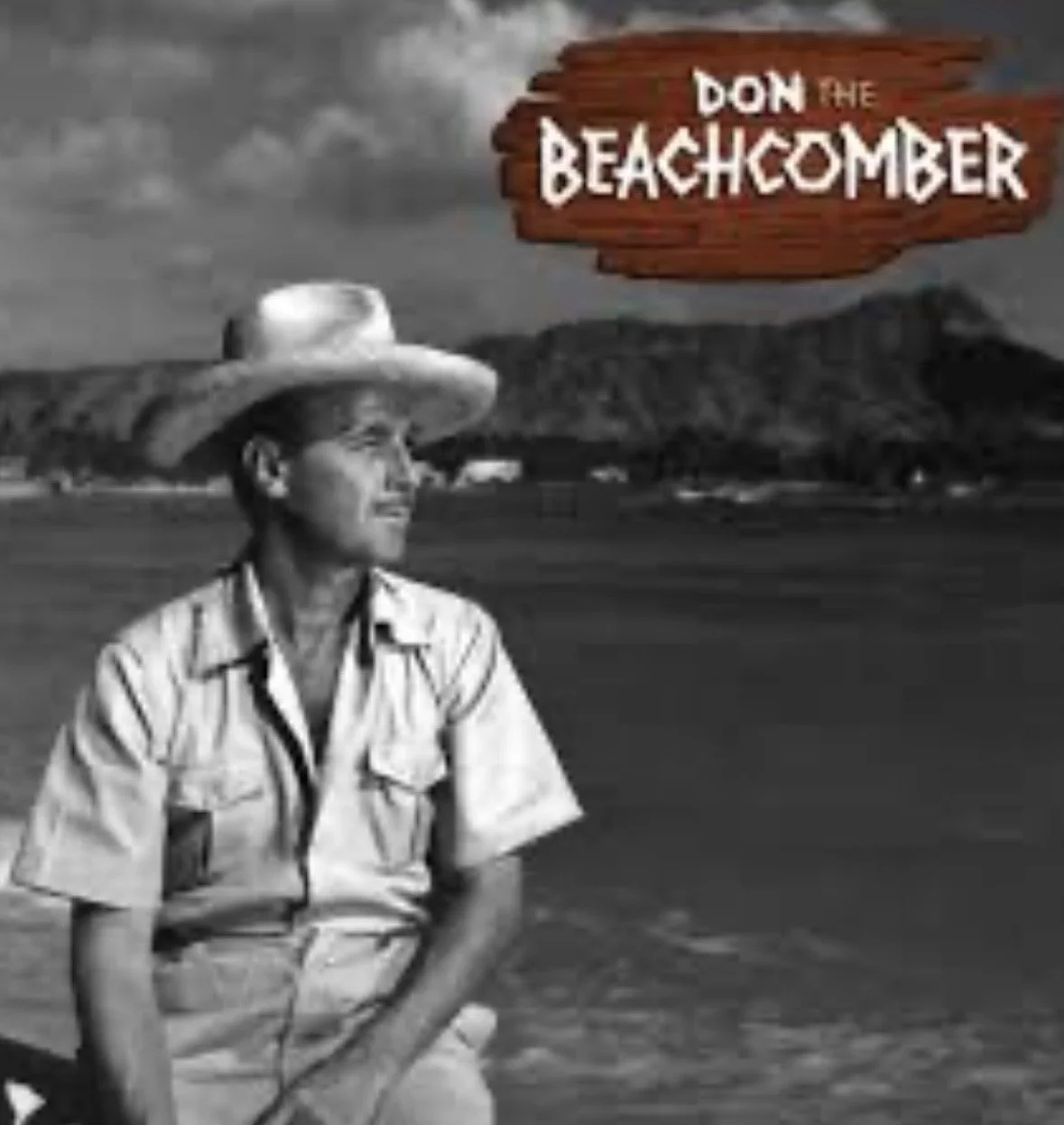
Donn Beach, better known as Don the Beachcomber
Welcome to Part Two of the Palm Springs Tiki Series.
See Part One for the beginning of this Series.
Donn Beach liked to tell a good story.
This was fortunate, because he had a lot of them.
One of his favorites concerned a choice his father supposedly offered him: money for college, or money to travel around the world. Donn chose the world, naturally, and embarked on what became an unusually long trip. He wandered through the Caribbean and elsewhere, picking up stories, recipes, bits of folklore and, apparently, whatever else he thought might come in handy later.
It is a wonderful story.
It is also a Donn Beach story, which means we should probably enjoy it without insisting too strongly on the paperwork. The problem with Donn's biography is that Donn himself was one of its principal authors.
He was born Ernest Raymond Beaumont Gantt in 1907. At some point, Ernest Gantt decided that Ernest Gantt was not quite the right character for the life he intended to lead. He became Donn Beach, eventually changing his legal name and creating a persona that was part South Seas adventurer, part beachcomber, part raconteur and part man who had apparently just returned from somewhere you had never heard of.
It was a remarkable piece of work. And it was years ahead of its time.
Today we have a perfectly respectable name for this sort of thing: performance art. Donn didn't have the benefit of the terminology, so he simply opened a bar.
The Invention of Donn Beach
When Donn opened his first Beachcomber in Hollywood in 1933, he was not merely decorating a room in a vaguely tropical fashion. He was creating an environment in which everything, including the proprietor, participated in the fiction.
The drinks had exotic names and complicated recipes. The room was dark, crowded with bamboo, rattan, shells, carved figures and other objects that suggested a tropical world just on the other side of the wall. There was music, mystery and enough rum to make the geography increasingly negotiable.
And there was Donn.
He looked the part, talked the part and encouraged customers to believe that this was not simply a man who had opened a bar in Hollywood. This was a man who had wandered the South Seas and brought some of it home with him.
Whether every one of those adventures actually happened was almost beside the point.
Donn understood something that would become enormously important in American popular culture: the story surrounding the product can be the product.
The bar was not just a bar. The drinks were not just drinks. And Donn Beach was not just the owner.
He was the host, narrator and leading character in the show.
It is easy, from the distance of almost a century, to underestimate how strange this was. We are accustomed to musicians inventing stage personas, restaurants creating elaborate immersive environments and celebrities carefully manufacturing public identities. Rock 'n' roll would eventually turn the invented persona into standard operating procedure. David Bowie could become Ziggy Stardust; Alice Cooper could become… Alice Cooper; Kiss could apply their makeup with small trowels.
Donn Beach got there first. He just did it with a blender and a little rum.
Sunny
There was, however, a practical problem with being a full-time performance artist. Someone still had to run the business.
That someone was Cora Irene Sund, known as Sunny.
Sunny became Donn's wife and, eventually, his former wife, but that did not end the business relationship. In many ways, Sunny was the person who transformed Donn's eccentric little Hollywood fantasy into an actual enterprise.
While Donn was developing drinks, refining the mythology and generally behaving like Donn Beach, Sunny was dealing with the considerably less glamorous work of expansion, employees, leases and money.
She was very good at it.
The original Beachcomber had moved into a larger location by the late 1930s, and Sunny helped expand the business to Chicago in 1940 and then to Palm Springs for their third location (still there today, now Bootlegger Tiki, more about it in Part One of this series) . Then came other locations, and Donn's little Hollywood fantasy began turning into something that looked suspiciously like a corporation.
When Donn went off during World War II, Sunny was left holding the keys.
By the time Donn returned in 1945, the operation had grown dramatically. Eventually there would be sixteen Don the Beachcomber locations on the mainland.
There is something wonderfully ironic about this.
Donn had invented the character.
Sunny built the company.
And when Donn came home, he found that the imaginary world he had created had become a real business without him.
The two remained partners, but their roles were increasingly clear. Donn was the visionary and figurehead; Sunny was the operator who understood how to turn the vision into something that could survive contact with reality.
Eventually Donn gave Sunny control of the mainland business and headed west to Hawaii. Which was probably the only possible ending.
If you have invented yourself as a South Seas beachcomber, and someone else has turned your fantasy into a sixteen-location business, the obvious next step is to go to Hawaii and invent yourself again.
Along comes Vic
By then, another man had been watching.
Victor Bergeron had opened a modest Oakland restaurant called Hinky Dinks in 1934. It was not initially a Polynesian fantasy. Then Bergeron encountered Don the Beachcomber.
He saw the bamboo and carved figures, certainly. He saw the drinks. But more importantly, he saw the idea.
Bergeron understood that the proprietor could be part of the fantasy, too. Hinky Dinks became Trader Vic's, and Victor Bergeron became Trader Vic.
It was more than a change of name. Donn Beach had created a character—the wandering beachcomber who had supposedly spent years roaming exotic places—and Vic created his own variation, the worldly trader who had supposedly done much the same thing. The trick was identical: the man behind the bar was no longer merely the proprietor. He was part of the mythology.
Donn had invented the fantasy. Vic understood how to multiply the fantasy.
And neither man was particularly fond of the other.
The Rivalry
There is a temptation to reduce the Donn Beach–Trader Vic rivalry to the question of who stole what from whom. That misses the more interesting story.
Donn's drinks were elaborate compositions of rums, juices, spices and secret syrups, sometimes so complicated that even his bartenders didn't know exactly what went into them. He had good reason to be protective: other new Tiki bars were hiring away some of his bartenders, taking with them knowledge of recipes that Donn had spent years developing.
Vic was perfectly capable of creating complicated drinks himself, but he was also interested in consistency, recognizability and scale. Donn was forever tinkering; Vic was building a brand.
It is tempting to call one the artist and the other the marketer, but that is too neat. Both were creators, businessmen and showmen. The difference was that Donn seemed compelled to keep inventing the fantasy, while Vic was increasingly interested in making the fantasy reproducible.
The Mai Tai
Eventually the rivalry centered on a cocktail.
The Mai Tai is generally credited to Trader Vic, who said he created it in Oakland in 1944 for friends visiting from Tahiti. The original was more restrained than many later versions: rum, lime, orange curaçao, orgeat and a few other ingredients.
Donn's admirers have long pointed to his earlier drinks, particularly the Q.B. Cooler, as evidence that Vic was working with ideas Donn had already developed.
The argument has been going on for decades, which suggests that neither side is likely to surrender anytime soon.
But there is something more revealing about the dispute than the question of who technically invented the drink. Both men understood that a cocktail could have a biography.
The Mai Tai was not simply a recipe. It had an origin story, a name, an exotic association and a proprietor whose persona gave it authority.
That was Donn's larger innovation, and Vic understood it perfectly.
Donn Becomes Even More Donn
Donn's move to Hawaii in the postwar years seems, in retrospect, almost inevitable. If Hollywood had provided the stage for his first act, Hawaii provided a much larger one.
He developed the International Market Place in Waikiki and surrounded himself with increasingly elaborate tropical environments. His office was famously located in a banyan tree. He experimented with restaurants, attractions, schemes and inventions with the restless enthusiasm of a man who regarded ordinary business practices as suggestions rather than rules.
At one early point in his career, Donn had installed a faucet and garden hose that ran up onto the tin roof over the bar. As guests began to prepare for their departure, Donn would make it rain. They would settle back in and order another round.
That little trick tells us something important about Donn. The illusion wasn't decoration added to the business.
The illusion was the business.
If you could make somebody believe it was raining in the tropics while they were sitting in a bar in Los Angeles, you had already solved most of the problem.
And this is where Donn Beach's influence reaches well beyond Tiki.
The World Inside the Room
Donn was interested in something we now call immersion.
The customer didn't simply look at the scenery. The music, smells, lighting, drinks and stories were all part of the ambiance, intended to make the customer feel transported. You could walk in from Hollywood Boulevard and, after a few steps, find yourself somewhere that existed only because Donn had decided it did.
He was doing this long before “immersive experience” became the sort of phrase that appears in marketing brochures.
It is tempting to wonder whether Walt Disney noticed.
The parallel is striking. Both were Southern Californians who understood that entertainment could be something you entered rather than something you watched.
Donn opened his first Beachcomber in 1933. Disneyland opened in Anaheim in 1955. Disney's Enchanted Tiki Room followed in 1963.
The chronology doesn't prove influence. It does suggest that Southern California had a particular talent for turning fantasy into a physical place.
Donn was doing it with bamboo, rum and a garden hose.
Disney did it with Main Street, Sleeping Beauty Castle and an army of Imagineers.
Different budgets. Similar instinct.
Give people a story, build the world around them, and let them step inside.
The Legacy of the Character
Donn's idea escaped the Tiki bar long ago.
It migrated into themed restaurants across America, into the elaborate stagecraft of rock 'n' roll, into Las Vegas and theme parks, and eventually into places such as Rainforest Cafe, where simulated thunderstorms and artificial jungle foliage turn dinner into a small piece of theater.
Donn would have recognized the trick immediately. He probably would have added more rum.
And the modern Tiki revival is, in a sense, another return to the same idea. People aren't merely interested in old cocktail recipes. They are interested in the world around them—the mugs, the music, the drinks, the room: it's all of a piece.
The escape is the point.
Donn understood all of this before there was a name for it. He spent his life creating Donn Beach, until eventually Ernest Raymond Beaumont Gantt disappeared into the character. Method acting, with a liquor license.
Which may have been exactly what he wanted.
And the next time you are in a place where the walls, the music, the drinks and the person serving them are all conspiring to transport you somewhere else, you'll have walked through a door that Donn Beach opened in Hollywood in 1933.
He just happened to charge admission in rum.
Of course, there was a problem with all this fantasy.
Once everybody in Omaha had a Tiki bar in the basement—the exotic was no longer exotic.
Tiki would eventually fall out of fashion.
So would midcentury modern.
And so would Palm Springs itself.
That's where the story gets even more interesting.
Part Three coming soon.
Enjoyed this article? Explore more of our "Local…" series to discover the Palm Springs stories that helped shape the desert's singular character. You'll find collections devoted to food, architecture, celebrities, history, culture and the people who continue to make Palm Springs unlike anywhere else.
At Artisan Food Tours, we spend our days walking Palm Springs neighborhood by neighborhood—through mid-century streets, historic restaurants, and the stories that hide behind unassuming doors. Some of those stories involve architects. Some involve Hollywood.
And some involve rum, torches, and a city that decided the South Pacific would look perfectly fine beside the San Jacinto Mountains. We love this idea so much we decided to offer a custom Tiki drink and food tour option.
Join us on a walking food tour and taste the Palm Springs that lives between the postcards. You'll leave with a full stomach, a better map of the city's appetites, and quite possibly an appreciation for why this desert keeps finding new ways to serve as an escape.
Dave Ball is a local tour guide and co-owner of Artisan Food Tours with his wife, Phyllis. He spends an inordinate amount of time thinking about Palm Springs history, neighborhood architecture, and where to find a great meal. His reigning food obsession remains local Deglet Noor dates with Fix & Fogg Crunchy Peanut Butter, though a Bootlegger Painkiller has lately been vying for the title. Stay tuned for this rapidly developing story.