
The Local Flavors | Palm Springs Tiki, Part One: Why the Desert Needed an Ocean
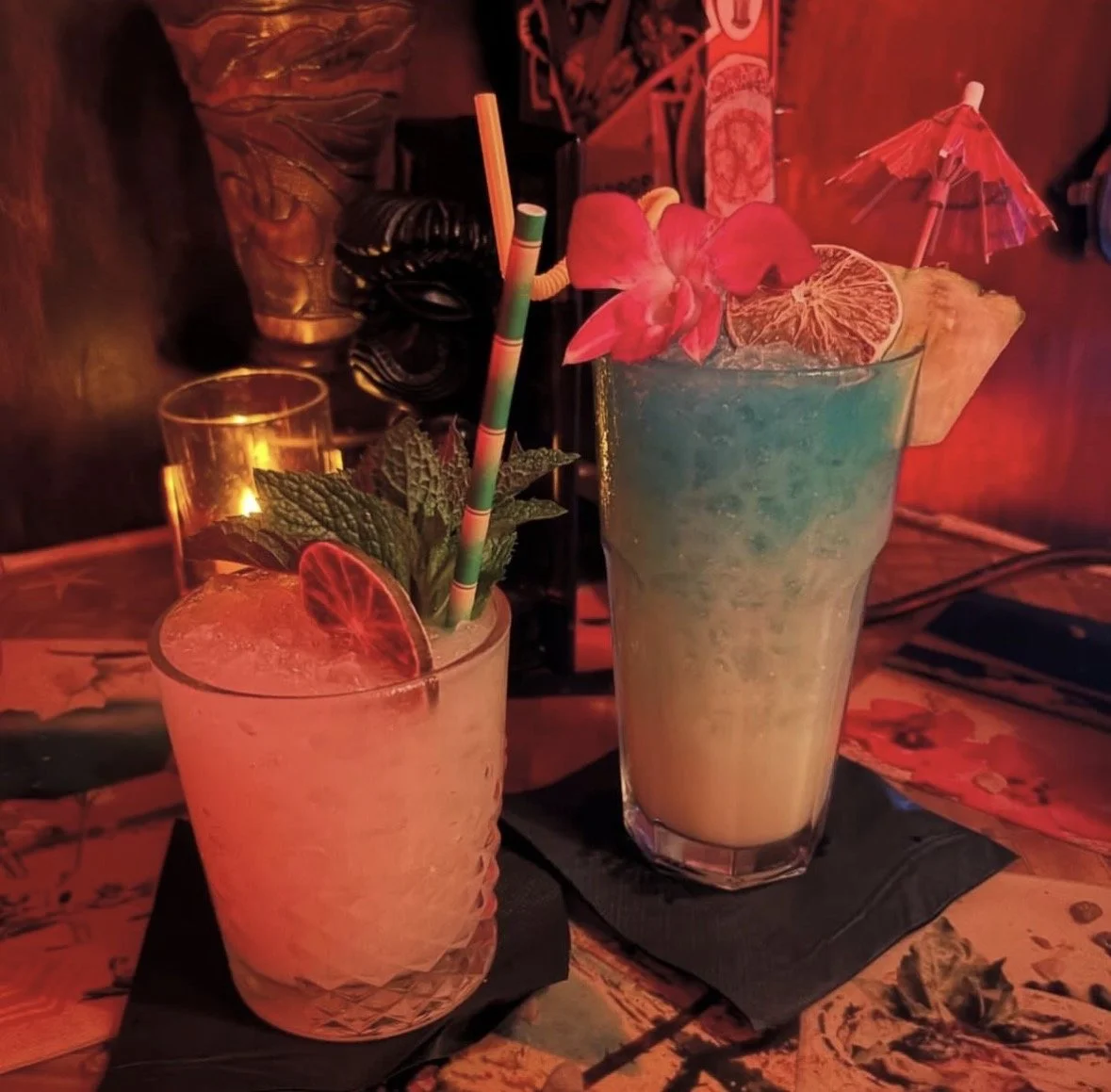
Bootlegger Tiki
There is something slightly unhinged about ordering a tropical drink garnished with a paper umbrella while standing in a place that receives fewer than five inches of rain a year.
Palm Springs has never been particularly bothered by this contradiction.
For roughly three-quarters of a century, this desert city has cultivated one of America's more improbable fantasies: a Polynesian island dropped into the middle of the desert.
Bamboo. Blowfish lamps. Rum drinks with names that sound like warnings. Flaming torches beside mid-century glass and steel.
It shouldn't work. It does. But only if you’re able to suspend disbelief.
This may be hard at first, but becomes considerably easier after a Mai Tai or two.
Escape Within an Escape
Palm Springs has always sold a remarkably simple promise: leave the ordinary world behind.
Hollywood came here to disappear. Architects came here to invent tomorrow. Visitors came here to sit by a pool and forget what day it was.
Tiki took that promise and turned up the volume.
If Palm Springs was already an escape from Los Angeles, a Tiki bar offered an escape from the escape—a second door into somewhere even more unlikely. A place with carved masks, thatched roofs, and cocktails strong enough to make you forget you were still within driving distance of a Trader Joe's.
The desert and the tropical island, it seems, share a certain personality. Both are oases. Both invite you to linger. Both suggest that ordinary rules have been temporarily suspended.
Palm Springs understood the appeal.
Enter Donn Beach
American Tiki culture did not begin in Palm Springs.
It began with a man improbably named Ernest Raymond Beaumont Gantt. Later known as Donn Beach, he opened Don's Beachcomber Bar in Hollywood in 1933, by some accounts, the day after Prohibition ended.
Yes. Donn and Don. He was that kind of guy. Pencil thin mustache. Panama hat. The real mystery is why Jimmy Buffett never wrote a song about him. More about Don/Donn coming up soon in Part Two of Palm Springs Tiki.
Donn mixed rum with fruit juices, invented drinks with theatrical names, and somehow convinced America that a bamboo-walled room in California could feel like the South Seas.
The restaurant name later became Don the Beachcomber, and the operation expanded to Chicago.
In 1953, a third Don the Beachcomber opened in Palm Springs at 1101 North Palm Canyon Drive, in what was then the Sunset Towers building. Frank Sinatra was a regular, the Navy Grog being his drink of choice. Bing Crosby and Bob Hope had their own celebrity chopstick cases displayed on the wall.
Tiki torches burned. The rum flowed. The desert briefly smelled like citrus, spice, and possibility.
Those torches burn again today.
They are not decorative nostalgia. They’re working history.
The Desert Goes Polynesian
Don the Beachcomber was not alone.
The Chi Chi mixed nightclub glamour with tropical theater. Aloha Jhoe's arrived with carved totems and Googie architecture so exuberant it could stop traffic. Luaus appeared in places that had never seen a coconut fall from a tree.
It was all slightly absurd. And completely of the moment.
World War II veterans returned from the South Pacific carrying memories of islands most Americans had never visited. Palm Springs, already fluent in leisure, simply added palm fronds and orgeat syrup.
The result was a city where Mid-century modernism and Polynesian pop lived next door to each other—sometimes in the same building—without either one seeming particularly surprised.
Soon enough, basement rec rooms in Nebraska sported Tiki bars.
What Survived
Tiki fashion, like most American enthusiasms, eventually cooled.
Many of the great Polynesian rooms faded. Menus changed. Bamboo came down. For a while, the whole idea felt as dated as a Harvey Wallbanger.
Palm Springs did what Palm Springs does best. It waited. And then it revived the good parts.
Today, in the Uptown Design District of Palm Springs, Bootlegger Tiki occupies the historic Don the Beachcomber space, tucked behind Ernest Coffee—named, naturally, for the man who started it all.
The room is intimate. The drinks are serious. You can still order a Zombie that would make Donn Beach nod in recognition, assuming he could see straight after one.
A few minutes down Palm Canyon, in the Downtown District, the Tonga Hut operates as a sister location to the 1958 North Hollywood original. Inside are carved gods, thatched wall textures, and glowing lamps that remind you Tiki was always half cocktail culture and half set design.
And farther south on E. Palm Canyon sits The Reef, a contemporary Tiki revival inside the original 1963 Polynesian-style hotel now called Caliente Tropics.
Palm Springs didn't merely revive Tiki. It remembered how to light the torches.
Why It Still Makes Sense Here
A good Palm Springs Tiki drink is not really about escaping to Hawaii. It is about escaping into Palm Springs. The Palm Springs version can taste like citrus from a valley that grows oranges and grapefruit as if the sun were a business partner.
The drinks are served in rooms designed for lingering. They reward the same local virtues the city has always practiced: conversation, theatricality, and the firm belief that an evening without urgency is not wasted time.
There is also the architecture of mood.
Step out of the desert glare and into a dim Tiki room, and the temperature of the day becomes someone else's problem. The mountains disappear. The parking lot disappears. For an hour or two, you are living inside a carefully constructed daydream—one that Palm Springs has been refining since the 1950s.
Other cities treat Tiki as a costume party.
Palm Springs treats it as local history wearing a Hawaiian shirt.
Raise a Glass to the Contradiction
Palm Springs is a city of contradictions that somehow get along.
It shouldn't belong here.
Which is precisely why it does.
Tiki belongs to that tradition.
It is Palm Springs admitting, with a grin and a swizzle stick, that if you are going to invent paradise, you might as well invent the drinks that go with it.
Come Hungry. Stay Curious.
At Artisan Food Tours, we spend our days walking Palm Springs neighborhood by neighborhood—through mid-century streets, historic restaurants, and the stories that hide behind unassuming doors. Some of those stories involve architects. Some involve Hollywood.
And some involve rum, torches, and a city that decided the South Pacific would look perfectly fine beside the San Jacinto Mountains. We love this idea so much we decided to offer a custom Tiki drink and food tour option.
Join us on a walking food tour and taste the Palm Springs that lives between the postcards. You'll leave with a full stomach, a better map of the city's appetites, and quite possibly an appreciation for why this desert keeps finding new ways to serve as an escape.
Enjoyed this article? Explore more of our "Local…" series to discover the Palm Springs stories that helped shape the desert's singular character. You'll find collections devoted to food, architecture, celebrities, history, culture and the people who continue to make Palm Springs unlike anywhere else.
Dave Ball is a local tour guide and co-owner of Artisan Food Tours with his wife, Phyllis. He spends an inordinate amount of time thinking about Palm Springs history, neighborhood architecture, and where to find a great meal. His reigning food obsession remains local Deglet Noor dates with Fix & Fogg Crunchy Peanut Butter, though a Bootlegger Painkiller has lately been vying for the title. Stay tuned for this rapidly developing story.