
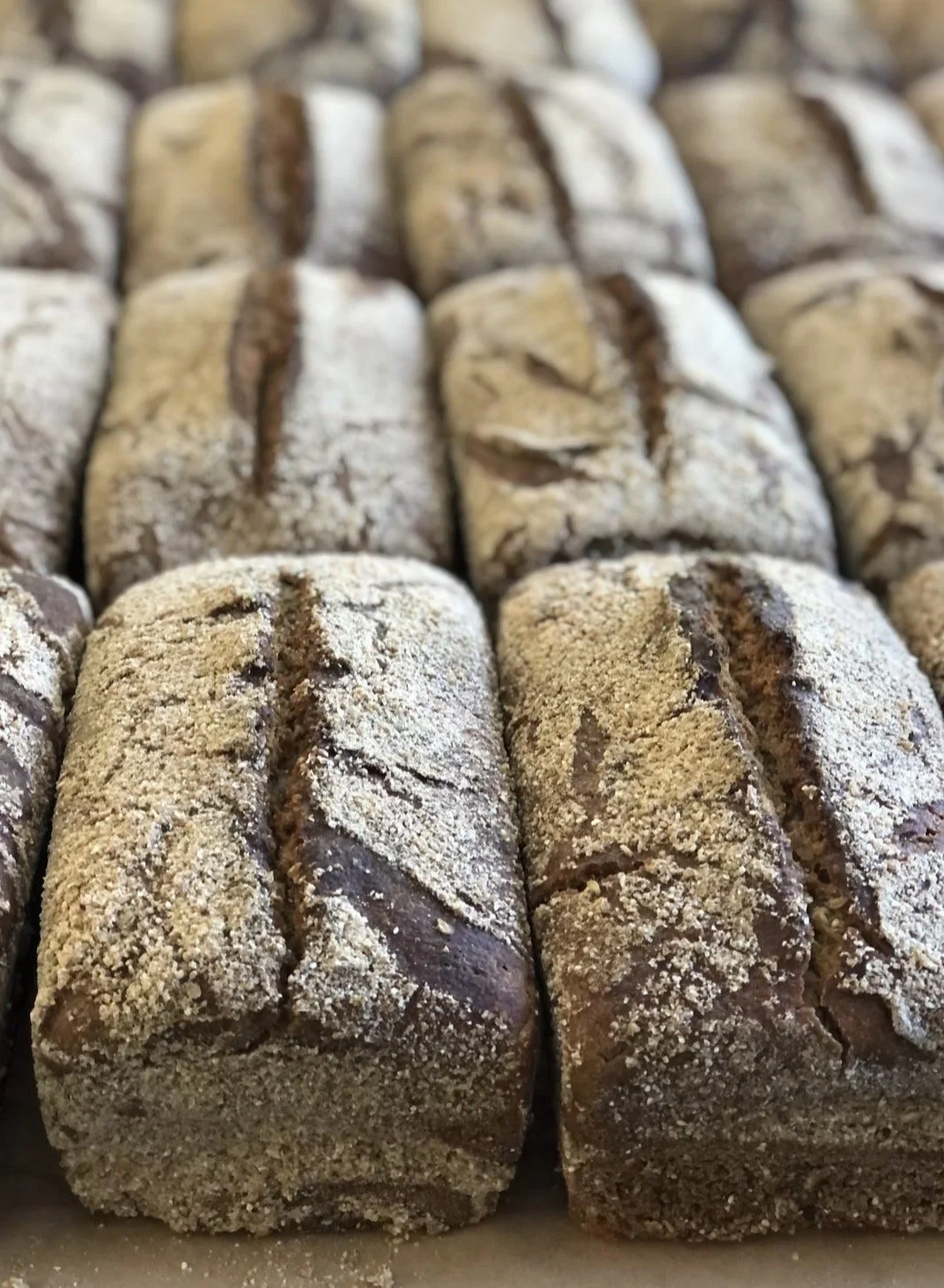
Sourdough loaves at Bread and Flours, Palm Springs
When traveling, I often miss the simple pleasure of being part of a group. I can spend my days exploring unfamiliar places, eating interesting food, and seeing things I’ve never seen before, yet still crave the social interaction that turns a good trip into a memorable one—conversation, shared discovery, and a few people to laugh with over lunch.
When we created Artisan Food Tours, my wife Phyllis and I wanted to offer that kind of experience, along with the food, history, and architecture of Palm Springs. The idea wasn't simply to take people from one restaurant to another. It was to give them a few hours in which we could discover a place together.
I've been reading Michael Pollan's Cooked and thinking about that motivation in a broader historical context.
Pollan explores the role food has played in human history—not just as nourishment, but as a way to bring people together, encourage cooperation, and create community.
Long before agriculture, humans gathered and hunted for food. But as Pollan shows, the work of growing, preparing, and cooking food introduced additional needs for planning, cooperation, and the sharing of knowledge. Over time, these practices helped shape the development of human culture and civilization.
I’m grateful not to be living in those early prehistoric times. Food, and the social interaction that goes along with preparing it and sharing it with other people, is one of the joys in my life.
Since you are reading this, I suspect you might agree.
Pollan also points out that, ironically, we've recently moved away from food as a shared experience. Convenience foods make it easier to eat separately, often in front of a screen—computer, phone, or television. The convenience is obvious. What we sometimes lose is the time, ritual, and conversation that can make a meal more than a means of getting fed.
Cooked takes us through four means of transforming raw ingredients into food: fire, water, air, and earth. In each section, Pollan investigates the science behind the process and its implications for our health, our development as a species, and the evolution of human culture.
He goes deep into food chemistry and our own biochemistry. I am finding much of this fascinating, even when the chemistry leaves me behind.
Fortunately, I can still enjoy food—and appreciate what Pollan offers—without a PhD in biochemistry.
For most of human history, people prepared, preserved, fermented, and transformed food without knowing anything about enzymes, microorganisms, proteins, or the chemistry of digestion. They learned through observation, experiment, necessity, and generations of accumulated experience.
They knew what worked long before they could explain why it worked.
Pollan's look into the science behind those practices gives us a new appreciation for that inherited knowledge. The people who developed these methods weren't ignorant; they possessed a different kind of knowledge, acquired through experience and passed along through culture.
One of the most engaging parts of Cooked is Pollan's decision to learn from people who have mastered these techniques. For fire, he goes to eastern North Carolina to learn about their specific style of pit barbecue. For air, he works with Chad Robertson at Tartine, the San Francisco artisan sourdough bakery. These firsthand, personal experiences add much to the story.
Fire, water, air, and earth. On our Artisan food tours, we sample at least three of these four different methods of transforming food. I’m now thinking about how we might also incorporate water, in a way beyond what is in your glass.
My main takeaway from Cooked is the social aspect of food. We need it to live, of course, but food also helps create and transmit culture. And it gives us a particularly enjoyable way to connect with one another.
On one of our recent walking food tours, I sat next to George and Julian. George was in his 80s, a gregarious Southern California retired restaurateur. Julian was a reserved young man from Florida. They discovered a shared interest in cocktails and, within moments, were discussing favorite distilleries and recipes, swapping knowledge and enthusiasm.
I love it when this happens.
If you do too, join us for a tour. We'll tell stories, share experiences, get to know one another, and enjoy some good food and a few laughs.
And maybe, just maybe, we'll make new friends.
It's been known to happen.
Enjoyed this article? Celebrities are just one part of Devour the Desert. Explore our "Local…" series for stories about the food, architecture, history, celebrities, and culture that make Palm Springs unlike anywhere else.
Join us at Artisan Food Tours and come see the Palm Springs behind the postcards, where food, architecture, history, celebrities, and outdoor dining with a group of friends are all part of the landscape.
Come hungry. Leave like a local.
Dave Ball is a local tour guide and co-owner of Artisan Food Tours with his wife, Phyllis. He spends an inordinate amount of time thinking about Palm Springs history, neighborhood architecture, and where to find a great meal. His current food obsession is local Deglet Noor dates with Fix & Fogg Crunchy Peanut Butter. However, the breakfast bread at Bread and Flours is posing a serious threat to the title. Stay tuned here for any breaking news.