
The Local Culture | Palm Springs and the Art of Belonging
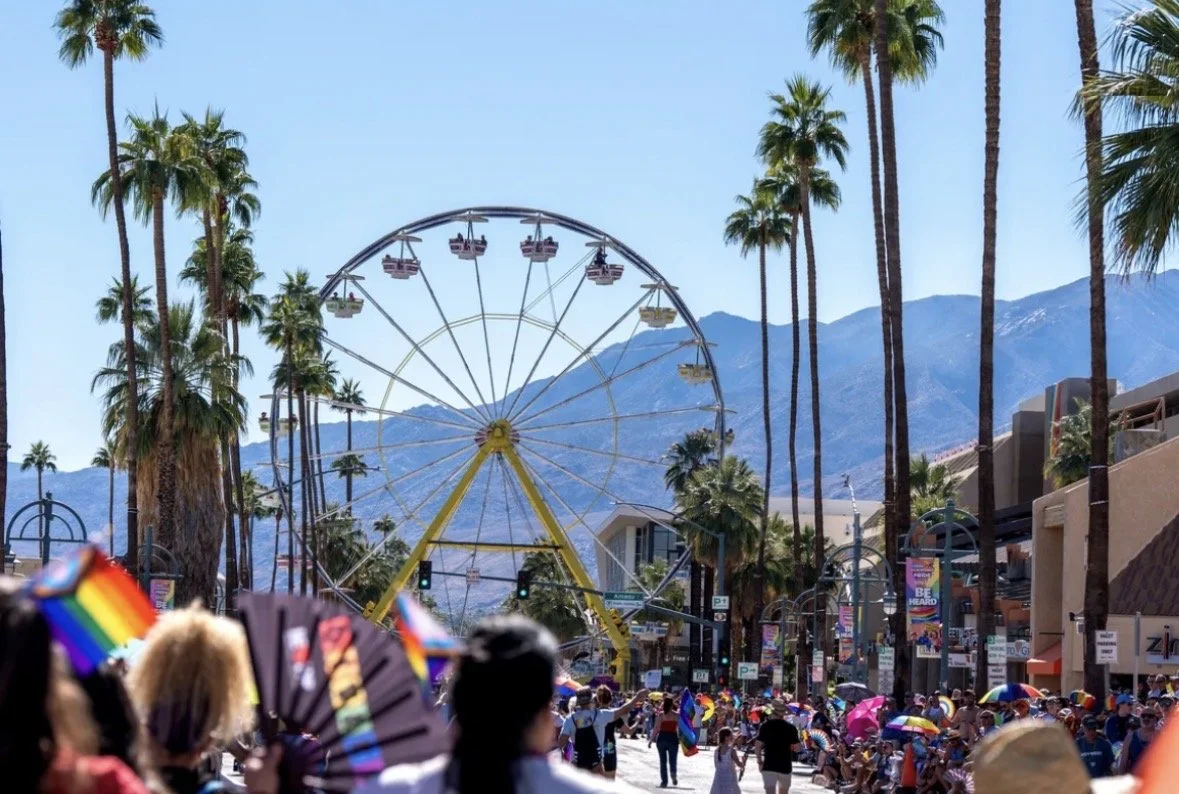
The annual Greater Palm Springs Pride Parade, November 9, 2025.
There are many reasons people fall in love with Palm Springs.
Some come for the sunshine. Some come for the architecture. Some come for the mountains, the swimming pools, the golf courses, the date shakes or the promise that January can feel like April.
But one of Palm Springs' most remarkable qualities is something less tangible and even more important: its long-standing culture of acceptance.
Long before diversity became a corporate slogan or inclusion became a political talking point, Palm Springs was quietly building a community where people could live more authentically than they often could elsewhere.
Over time, that spirit helped transform the city into one of America's most welcoming LGBTQ+ destinations for both visitors and residents. The history of the Palm Springs gay community is woven into the city's architecture, restaurants, neighborhoods and civic life.
Why did this happen here and not elsewhere? Several factors converged. Hollywood's "two-hour rule" made Palm Springs an easy weekend escape. The city's resort economy valued discretion. Retirees, artists and entrepreneurs brought diverse perspectives.
Over time, those influences created an unusually welcoming environment that attracted generations of LGBTQ+ residents and visitors. Some longtime residents also point to the recession of the early 1990s, when more affordable mid-century homes and renewed interest in modernist architecture attracted another generation of newcomers.
The story of Palm Springs is, in many ways, a story about belonging. A place where there is room at the inn. Shelter from the storm. Refuge.
But in parallel, another part of the story is that the city developed a remarkable talent for minding its own business. It turns out that welcoming people while letting them live their lives their way is a surprisingly effective strategy for building a happy city.
From Privacy to Pride
For much of the twentieth century, gay Americans often lived in the shadows. In many cities, careers, reputations and even personal safety could be threatened by being openly gay.
Palm Springs offered something rare: privacy and tolerance.
Few stories illustrate Palm Springs' early character better than that of the White sisters.
Dr. Florilla and her sister Cornelia moved to Palm Springs after escaping the Mexican revolution. While they lived in an era before modern LGBTQ+ terminology was widely used, local newspapers frequently described them using historical "code words" for lesbians—such as "eccentric," "unusual," "independent," and "free-spirited".
According to David Wallace’s A City Comes Out, Dr. Florilla White lived openly in a relationship with Flying Rose Dougan, an early female aviator and art collector. The book notes them as a "fairly out couple" in the valley.
While there is no evidence of any romantic relationships, Cornelia White rejected the rigid gender norms of the early 20th century. While other women wore full skirts and petticoats, Cornelia notoriously wore riding breeches, boots, and a pith helmet, and spent most of her days exploring the desert and the world beyond. She had left home at eighteen and spent much of her life as a fearless adventurer, traveling widely on her own at a time when few women did.
Together, the sisters ran the Palm Springs Hotel, an early establishment known for its welcoming, eclectic atmosphere. In retrospect, their story foreshadowed the culture of openness that would later help define Palm Springs. Today they are widely celebrated as two of the city’s founders.
Hollywood stars, executives, artists and professionals also found refuge here. Behind hedges and gates, they could relax away from the scrutiny that followed them elsewhere. While discretion was often necessary, the desert became a place where friendships flourished, communities formed and people could exhale.
The city's culture gradually evolved from quiet tolerance to open acceptance.
By the 1970s and 1980s, Palm Springs had become a recognized destination for LGBTQ+ visitors. In the decades that followed, gay residents became increasingly visible participants in civic life, business, philanthropy, the arts, hospitality, and local government.
How the LGBTQ+ Community Shaped the Palm Springs Culinary Scene
LGBTQ+ residents have become deeply woven into Palm Springs' cultural, economic and social fabric, helping shape the visitor experience.
Many of the city's most beloved events, from festivals to charity fundraisers, thrive because these residents are willing to donate their time, talent and resources to causes that strengthen the entire community.
Palm Springs' culture of acceptance shaped more than its social fabric. It influenced the city's restaurants, hotels, galleries, and hospitality industry. Strolling along North Palm Canyon Drive, you can feel this energy.
The striking white-and-hot-pink interiors of Eight4Nine Restaurant and Lounge greet diners. This LGBTQ+-owned culinary anchor transforms an expansive historic post office building into an architectural showcase.
Just Fabulous is a beloved, gay-owned retail hub that curates design books, vibrant art prints, and mid-century gifts. It captures the colorful and cheeky spirit that defines modern desert style.
And hyphen-wines is a third, an LGBTQ+ owned natural wine store. John Libonati, the “Wine Thief” there brought deep East Coast wine and restaurant experience to the desert, along with a great sense of humor and engaging personality.
Even the business's name reflects the spirit of Palm Springs. A hyphen connects two separate ideas into something stronger. It's an apt metaphor—not just for wine, but for the community Palm Springs has spent generations building.
These are three very different businesses, but none seem particularly interested in blending into the background, which is part of their charm. Each reflects the confidence to be distinctive rather than conventional—a quality Palm Springs has long rewarded.
We’ll visit all three of these businesses on our Uptown Design District Tour beginning in early winter (specific dates will be posted on the booking schedule).
Palm Springs is a Wonderful Place to Get Engaged (Even Without a Proposal)
What is the result of the warm welcome and the sense of belonging? A city that feels unusually engaged.
People don't simply live in Palm Springs. They participate in Palm Springs.
Committee meetings somehow attract actual volunteers instead of the three people who accidentally wandered into the wrong room.
Charity galas sell out with remarkable efficiency. Local residents appear constitutionally incapable of declining an auction bid for a good cause.
Fundraisers appear with the frequency of new pool floats.
Visitors often notice it immediately. There is a friendliness in the air. A willingness to strike up conversations. A sense that individuality is not merely tolerated but appreciated.
In some cities, strangers avoid eye contact.
In Palm Springs someone may recommend a restaurant, explain Modernism Week, ask where you're visiting from, and invite you to dinner before your latte cools.
It's the product of generations of people building a community where differences are not obstacles to overcome but strengths to celebrate.
A Model for the Country
At a time when much of America seems eager to argue about its differences, Palm Springs offers a different example.
The city is far from perfect—no place is—but it has demonstrated something important: people from different backgrounds, political views, religions, ages and orientations can live together with mutual respect.
In Palm Springs, retirees mingle with young entrepreneurs. Midwestern snowbirds share sidewalks with California creatives. Straight couples, gay couples, families, artists, hospitality workers and business owners all contribute to the same civic fabric.
What unites them is often stronger than what separates them because communities flourish when people feel safe enough to be themselves.
The success of Palm Springs is not that everyone agrees on everything. The success of Palm Springs is that people have learned to coexist, and more importantly, build community, with a remarkable degree of courtesy, generosity and respect.
Palm Springs has always had a habit of treating historic milestones with a certain desert nonchalance. When the city became the first in America with an all-LGBTQ+ city council in 2017, there was certainly national attention. Locally, however, many residents seemed more interested in whether the council could keep the streets paved, the parks maintained, and the city moving forward. In its own way, that may have been the greatest sign of progress.
Perhaps Palm Springs was uniquely positioned to become this kind of community. It began as a place where outsiders came to reinvent themselves. Hollywood stars escaped scrutiny here. Artists escaped convention. Retirees escaped winter. Entrepreneurs escaped crowded cities.
In a town built on reinvention, accepting people who didn't fit elsewhere may have been less radical than simply continuing a long local tradition.
The Desert Tastes Better Together
At Artisan Food Tours, we see this spirit every day.
Our guests come from every corner of the country and around the world. They arrive with different stories, different backgrounds, and different perspectives. Then something wonderful happens.
They sit down together, share meals, laugh, discover local history, and for a few hours experience the community that makes Palm Springs special.
The city's remarkable food scene, its accepting atmosphere and its rich cultural history are all connected. You can't truly understand Palm Springs without understanding the people who helped build it—including the generations of LGBTQ+ residents whose contributions continue to shape the city today.
Palm Springs still offers sunshine, mountains and swimming pools. But perhaps its greatest achievement is less visible. It became a place where people could arrive as strangers and feel welcome. In a world that often seems determined to divide itself into smaller and smaller camps, that's a remarkable thing to find in a desert town…
And it’s worth celebrating.
Join Us and Taste the Story
If you'd like to experience the flavors, history, architecture, culture and our welcoming spirit that all define Palm Springs, join Artisan Food Tours on one of our culinary journeys through the heart of the village.
Our small group, owner-led Palm Springs food tours combine local cuisine, fascinating stories, hidden gems and the unique history that has made this desert oasis unlike anywhere else in America.
Our fall tours begin October 2nd but you can reserve your place now by clicking on the ”Book Now” button. Please join us to hear many more stories, taste fabulous food and drink and enjoy “all things Palm Springs!”
Enjoyed this article? Explore more of our "Local …" series to discover the Palm Springs stories that helped shape the desert's singular character. You'll find collections devoted to food, architecture, celebrities, history, culture and the people who continue to make Palm Springs unlike anywhere else.
Dave Ball is a local tour guide and co-owner of Artisan Food Tours with his wife, Phyllis. He spends an inordinate amount of time thinking about Palm Springs history, neighborhood architecture, and where to find a great meal. His current food obsession is local Deglet Noor dates with Fix & Fogg Crunchy Peanut Butter.